What is Agilent SLIMS?
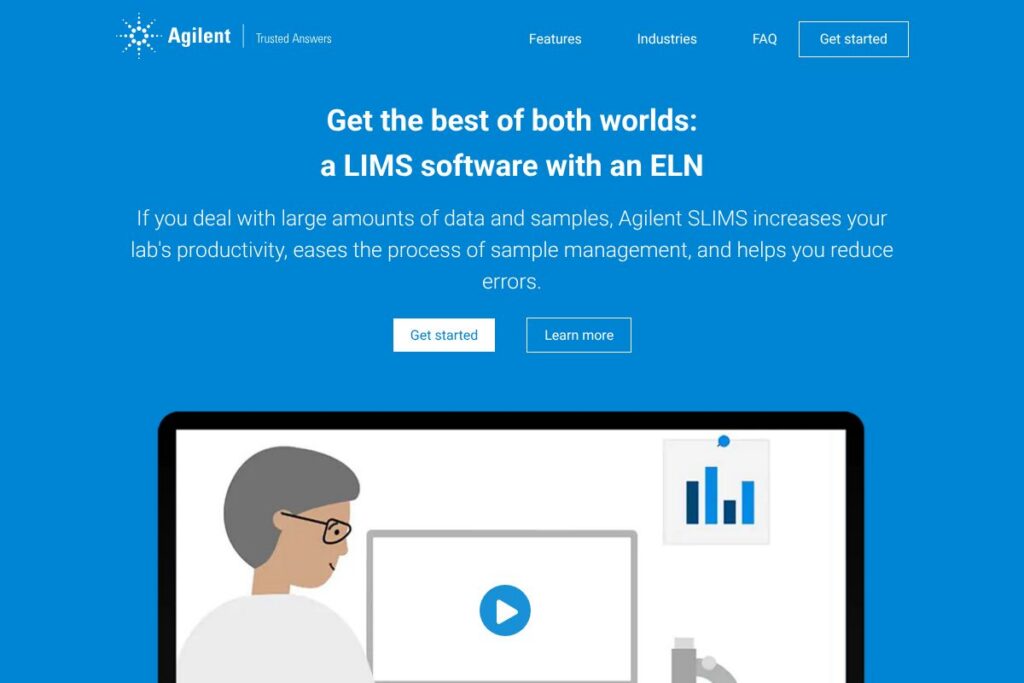
Agilent SLIMS is a laboratory execution system that merges the sample-centric capabilities of a LIMS with the protocol-driven features of an ELN. It provides sample tracking, protocol execution, instrument integration, audit trails, and reporting in one web-accessible application that can be hosted on-premise, on Agilent-managed infrastructure, or in a customer cloud environment.
Compared with Thermo Fisher SampleManager and LabWare LIMS, Agilent SLIMS emphasizes tighter product integration with Agilent instruments and a packaged library of domain-specific configurations via the SLIMS Store to accelerate deployment. Against modern ELN-first platforms such as Benchling, SLIMS focuses more on operational execution and regulatory controls rather than being a research collaboration platform alone.
All of this makes Agilent SLIMS well suited for regulated analytical labs, pharmaceutical and biobanking environments, and high-throughput operations that require instrument interfacing, strict data integrity controls, and a single system to run and trace workflows from intake to reporting.
How Agilent SLIMS Works
SLIMS operates as a web application accessed from standard browsers on desktops and tablets, with core modules for sample registration, workflow design, and execution. Lab staff register samples, assign workflows, and follow guided steps in the LES while SLIMS records actions, timestamps, and results for full traceability.
Integrations with laboratory instruments and third-party enterprise systems enable automated data capture and process handoffs; when instruments produce data SLIMS can ingest results, update sample records, and progress the workflow. SLIMS Store packages provide ready-made sample types, protocols, and automation snippets that can be installed and customized to shorten time-to-value.
Agilent SLIMS features
SLIMS groups LIMS and ELN capabilities into a single LES that covers sample lifecycle management, workflow execution, instrument interfacing, compliance controls, and a library of deployable configurations. The platform also includes deployment flexibility and APIs for connecting to business systems and Agilent software.
Key functionality includes:
Sample and inventory tracking
SLIMS tracks samples from receipt through storage, processing, and reporting, maintaining location history and chain of custody. This helps labs reduce sample loss, automate freezer management, and locate materials quickly during audits or transfers.
Laboratory execution and protocol management
The LES component turns written procedures into stepwise electronic protocols with guided inputs, automated checks, and conditional branches to enforce correct execution. Technicians follow the protocol in the interface which reduces variability and supports review-by-exception workflows.
Instrument integration and automation
SLIMS supports integration with laboratory instruments to capture results and instrument metadata directly into the system, reducing manual transcription and measurement errors. Automated handoffs between devices and workflows speed processing and improve data integrity across high-throughput pipelines.
Compliance, audit trails, and data integrity
Built-in controls support regulatory requirements such as FDA 21 CFR Part 11, EU Annex 11, ISO/IEC 17025 and similar standards by recording electronic signatures, audit trails, and role-based access. These features simplify validation, review, and long-term archival of compliant records.
SLIMS Store and prebuilt configurations
The SLIMS Store provides modular content such as sample types, locations, metadata schemas, and automation snippets that can be installed out of the box or adapted for specific domains. This reduces initial configuration time and provides sector-specific starting points for labs.
Deployment options and hosting
SLIMS can be hosted by Agilent, installed on customer cloud providers, or deployed on-premise on customer servers, offering flexibility for security, connectivity, and governance requirements. The web-based interface requires no local client maintenance, enabling rapid adoption across teams.
Reporting, dashboards, and analytics
The platform includes reporting tools and dashboard views to monitor throughput, instrument status, and workflow bottlenecks, enabling managers to spot issues and plan resources. Custom reports can extract COAs, batch summaries, and audit documentation for stakeholders and regulators.
With these capabilities, SLIMS brings sample control, automated execution, and compliance into a single application, reducing manual steps and centralizing laboratory operations for faster, more reliable outputs.
Agilent SLIMS pricing
Agilent SLIMS uses a custom enterprise pricing model tailored to deployment size, modules required, and implementation scope rather than fixed public price tiers. Organizations typically receive quotes that account for number of users, deployment method, instrument integrations, and required validation services.
Enterprise pricing
Enterprise – Custom pricing (deployment choices include Agilent-hosted cloud, customer cloud, or on-premise; features and professional services quoted per project). For specific options and to request a tailored proposal, see the Agilent SLIMS product page or request a custom demo to discuss scope and pricing.
What is Agilent SLIMS Used For?
SLIMS is used to run complete laboratory workflows end to end, from sample intake to final reporting. Common applications include analytical chemistry testing, pharmaceutical sample processing, next-generation sequencing sample management, and biobank specimen tracking.
Labs that require regulatory compliance and instrument integration rely on SLIMS to centralize data, automate routine processes, and maintain audit-ready records. Core facilities, quality assurance teams, and principal investigators also use SLIMS dashboards and reports to monitor operations and resource utilization.
Pros and cons of Agilent SLIMS
Pros
- Combined LIMS and ELN in one system: Provides both sample-centric LIMS functionality and protocol-driven ELN features in a single LES, reducing the need to manage two separate tools.
- Strong instrument and Agilent ecosystem integration: Tight interfacing with Agilent instruments and software simplifies data flows and reduces manual transcription between devices and systems.
- Prebuilt content to accelerate deployment: SLIMS Store packages and domain-specific configurations shorten implementation timelines and reduce reliance on extensive custom development.
- Regulatory focus and audit controls: Built-in electronic signatures, audit trails, and validation support align with FDA 21 CFR Part 11 and other common regulatory frameworks.
Cons
- Custom pricing and enterprise orientation: Pricing and deployment are tailored per customer which means no transparent public pricing for small labs evaluating options on a budget.
- Implementation complexity for large labs: Full-featured LES deployments can require planning, process mapping, and configuration time; some labs will need professional services for advanced integrations.
- Vendor-specific ecosystem strengths: Strong benefits when using Agilent instruments and software, while integrating large numbers of non-Agilent systems may require additional configuration effort.
Does Agilent SLIMS Offer a Free Trial?
Agilent SLIMS is offered as a paid enterprise solution with custom pricing; trial or pilot arrangements are typically provided on request through Agilent sales and services. Labs interested in evaluating SLIMS can request a demo or discuss pilot access with Agilent to assess fit, deployment options, and time-to-value.
Agilent SLIMS API and Integrations
SLIMS exposes APIs and integration options to connect with laboratory instruments, enterprise systems, and other Agilent platforms such as OpenLab and the Alissa Platform. The Agilent SLIMS product page outlines integration capabilities and recommended connection patterns.
Common integration targets include identity management systems, ERP platforms such as SAP, instrument control software, and third-party analysis platforms; these connections enable automated data exchange, single sign-on, and consolidated reporting across the lab ecosystem.
10 Agilent SLIMS alternatives
Paid alternatives to Agilent SLIMS
- Thermo Fisher SampleManager — A mature LIMS with strong support for regulated environments, advanced sample management, and broad instrument integration across life sciences and analytical labs.
- LabWare LIMS — A highly configurable enterprise LIMS widely used in large laboratories for sample tracking, instrument connectivity, and compliance; often selected for deep customization needs.
- LabVantage — An enterprise lab informatics suite that covers LIMS, ELN, and LES scenarios with analytics and integration for complex lab estates.
- Benchling — A modern, cloud-native research platform that combines ELN and data management with collaboration tools; stronger for R&D workflows than for some regulated manufacturing labs.
- Dotmatics — Focused on scientific data management and informatics, providing ELN features alongside assay and sample data integration for research-driven labs.
- PerkinElmer LABWORKS — An enterprise LIMS for analytical and clinical labs offering workflow automation and instrument integration.
Open source alternatives to Agilent SLIMS
- Bika LIMS — An open source LIMS built on Plone that supports sample tracking, instrument integration, and reporting for small to mid-sized labs.
- LabKey Server — An open source platform for managing, integrating, and analyzing laboratory data, commonly used in research and translational projects.
- OpenSpecimen — An open source biobanking solution focused on specimen lifecycle management, consent tracking, and study management for biorepositories.
- eLabFTW — An open source ELN suited for labs that need electronic note-taking, experiment tracking, and basic sample management without enterprise LIMS complexity.
Frequently asked questions about Agilent SLIMS
What compliance standards does Agilent SLIMS support?
Agilent SLIMS supports common lab compliance standards such as FDA 21 CFR Part 11, EU Annex 11, and ISO/IEC 17025. The platform provides audit trails, electronic signatures, role-based access, and technical controls to help laboratories meet regulatory requirements.
Can Agilent SLIMS integrate with laboratory instruments?
Yes, Agilent SLIMS can integrate with instruments and instrument control software to capture results and metadata automatically. These integrations reduce manual transcription, speed workflows, and improve data integrity across sample processing steps.
Is Agilent SLIMS available as a cloud-hosted option?
Yes, Agilent SLIMS can be hosted on Agilent-managed infrastructure, deployed on a customer cloud provider, or installed on-premise. This flexibility lets labs choose the hosting model that matches their security, compliance, and connectivity needs.
How does Agilent SLIMS help biobanks and clinical studies?
Agilent SLIMS supports specimen tracking, consent management, and study workflows that biobanks require. Built-in metadata management and lifecycle tracking let teams monitor collection events, processing, storage, and distribution with full traceability.
How long does implementation of Agilent SLIMS typically take?
Implementation timelines vary depending on scope, integrations, and configuration needs, and are estimated during scoping with Agilent services. The SLIMS Store and prebuilt packages can accelerate setup, while custom integrations and validations add time depending on complexity.
Final verdict: Agilent SLIMS
Agilent SLIMS does well at combining LIMS-level sample management with ELN-style protocol execution into a unified LES, with an emphasis on instrument integration and regulatory controls. Its SLIMS Store and Agilent engineering support are practical advantages for labs that want faster deployment and tighter integration with Agilent instruments.
Compared to LabWare LIMS, both platforms target enterprise customers with custom pricing, but SLIMS offers stronger out-of-the-box content for Agilent-heavy environments and simpler packaged deployments via the SLIMS Store. LabWare is often preferred for very large installations that require deep, bespoke configurability; pricing for both is quoted per project and reflects implementation scope and services.
Overall, Agilent SLIMS is a strong option for laboratories that need a single system to run, trace, and report on testing workflows while maintaining compliance and reducing manual data handling. For teams that prioritize rapid instrument integration and packaged domain configurations, SLIMS is particularly well aligned.