Revel Systems: An Overview
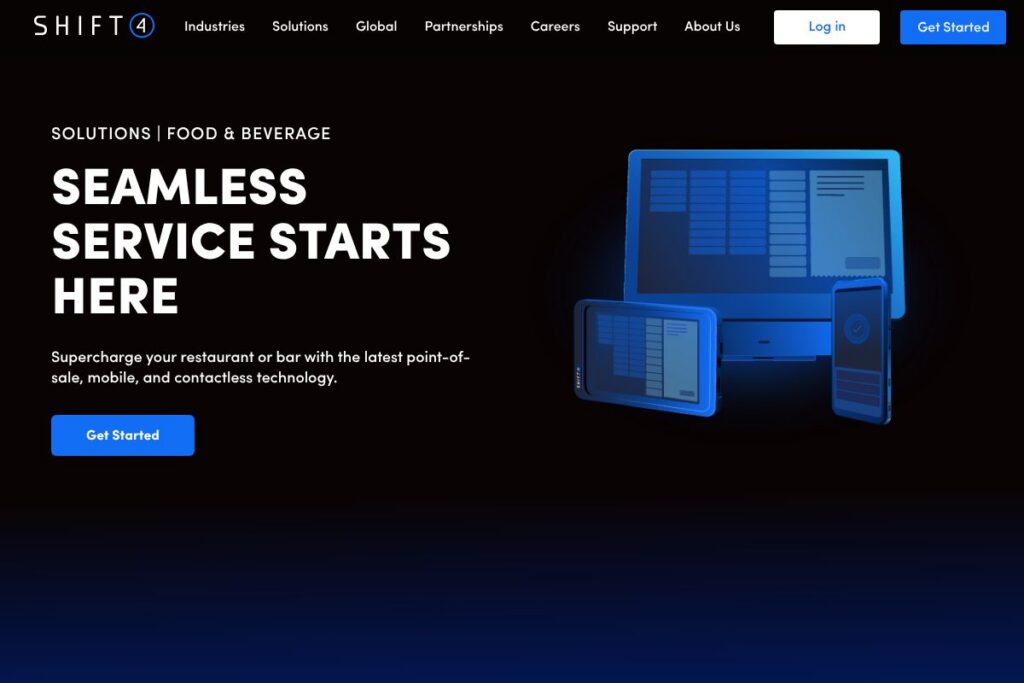
Revel Systems is a restaurant-focused point-of-sale platform that combines front-of-house ordering, mobile and contactless payments, and a cloud back office to manage operations across single and multi-location businesses. The product line centers on integrated POS hardware and software, SkyTab mobile/tablet ordering, a branded online ordering engine, and a Lighthouse business manager for reporting and operations control. Revel also provides payment processing and specialized services for larger deployments through its Shift4 integration and MICROS/Focus center offerings.
Compared with competitors, Revel Systems positions itself between turnkey, consumer-facing providers like Toast and hardware-first vendors like Clover. Compared to Toast, Revel emphasizes extensible integrations and enterprise deployment support, while Toast focuses on packaged hardware-software bundles for indie restaurants. Against Lightspeed, Revel is stronger on specialized F&B payment flows and multi-location operational controls, while Lightspeed leans into inventory and retail flexibility.
Revel Systems is best suited to restaurants, bars, and multi-location operators that need a single system for in-person sales, mobile/tablet ordering, and managed online channels. Its strength is in combining payment processing, industry-specific features such as tips and tabs, and a marketplace for third-party extensions, making it practical for operators who want an all-in-one platform with options for enterprise-grade support.
How Revel Systems Works
Revel runs POS software on dedicated terminals, tablets, and mobile devices that connect to a cloud back end for centralized management. Staff take orders and accept payments at the counter, on handheld devices, or at the table with SkyTab Air, with transactions routed through Revel’s payment processing stack and stored to the cloud for reporting.
Orders placed via the integrated online ordering channel or QR code menus flow directly into Revel’s order management and kitchen routing, avoiding separate third-party marketplaces. Managers use Lighthouse to configure menus, pricing, employees, and to review sales and labour analytics across multiple locations, while third-party apps from the POS Marketplace extend capabilities for accounting, delivery, and loyalty.
A typical workflow starts with menu setup and hardware provisioning, staff training on the POS interface, enabling online and mobile ordering channels, and then refining reporting and labour schedules via Lighthouse. Integrations for existing MICROS or Focus deployments let organizations adopt Revel payments without replacing the entire POS if they prefer a payments-first approach.
What does Revel Systems do?
Revel Systems combines point-of-sale transaction processing with modules for online ordering, mobile/tablet ordering, contactless QR code ordering and pay-at-table, and a cloud-based back office. The platform also includes loyalty and gift card support, reporting and analytics, and a marketplace for third-party integrations that extend payroll, accounting, and delivery capabilities.
Key platform components include SkyTab for mobile/tablet ordering and payment, Lighthouse Business Manager for centralized reporting and store management, and integrated payment services that include EMV and tokenization. The system also supports enterprise services such as MICROS and Focus Centers of Excellence for organizations migrating from legacy Oracle MICROS or Focus POS systems.
Key features worth highlighting:
Point of Sale
The POS supports order entry, modifiers, splitting checks, tips, tabs, and offline processing, designed for fast service in busy restaurants and bars. It brings menu management, staff permissions, and day-to-day transaction handling together so floor staff can process sales with minimal friction.
SkyTab Air (mobile ordering and pay-at-table)
SkyTab Air enables servers or guests to order and pay at the table using handheld devices, reducing walk time and improving table turnover. Mobile checkout integrates with the same menu, modifiers, and payments system used at fixed terminals to keep accounting and reporting consistent.
QR Code Order & Pay
QR codes let guests view a menu, place an order, and pay using their phone without waiting for staff, which speeds service and reduces reliance on third-party delivery apps. Orders from QR workflows route back into the POS and kitchen routing like any other ticket.
Integrated Online Ordering
Revel provides an in-house online ordering engine so restaurants can accept takeout and delivery orders without sending them to third-party marketplaces that charge high commissions. The online menu syncs to the POS to keep pricing and availability consistent across channels.
Lighthouse Business Manager
Lighthouse is the cloud back office for multi-location control, combining sales reports, labor analytics, inventory snapshots, and user management in one interface. Managers can run shift-level reports, monitor sales trends, and push menu updates to specific locations from Lighthouse.
POS Marketplace and Third-Party Integrations
The POS Marketplace hosts integrations for loyalty, delivery, accounting, and hardware extensions so restaurants can add capabilities without custom development. Marketplace apps connect to Revel to sync sales, customers, and inventory where supported.
Loyalty, Gift Cards, and Marketing Tools
Built-in loyalty and gift card features allow restaurants to manage promotions, issue and redeem gift cards, and track repeat customers in the same system used for transactions and reporting. Marketing tools help operators run targeted campaigns based on guest behavior captured through transactions.
Payment Security and Processing
Revel supports EMV, PCI-validated point-to-point encryption, and tokenization to protect cardholder data at the terminal and in transit. The platform also offers payment processing integration and hardware bundles to simplify PCI compliance and reduce setup complexity.
With these capabilities, Revel centralizes order capture, payments, and business intelligence so operators can run their restaurants from a single combined POS and back-office platform. The biggest benefit is consistent data across sales channels, which simplifies reporting, labour planning, and menu management.
Revel Systems pricing
Revel Systems uses a custom pricing approach tailored to the size of the operation, the number of terminals, and the services required, rather than public, line-item plans. Pricing typically varies by deployment scale, hardware bundles, payment processing agreements, and whether enterprise services such as MICROS or Focus support are requested; for tailored quotes see the current pricing options on Revel Systems.
For businesses evaluating costs, expect pricing conversations to include one-time hardware purchases or leases, monthly software or support fees based on locations or terminals, and payment processing fees determined by transaction volume and card types. Contact Revel’s sales or request a demo through their get started funnel to obtain a detailed quote matched to your operation.
What is Revel Systems Used For?
Revel Systems is used to operate in-person and online sales channels for restaurants, bars, quick-service outlets, and multi-location chains. Operators use the platform for order entry, payments, kitchen routing, online takeout and delivery, loyalty programs, and consolidated reporting across locations.
It is particularly useful for multi-location restaurants that need centralized menu management and consistent reporting, for venues that require mobile and pay-at-table options, and for operators who prefer to host online ordering in-house rather than relying on third-party marketplaces. Enterprise customers also use Revel when migrating from legacy systems while retaining payment processing capabilities.
Pros and Cons of Revel Systems
Pros
- Restaurant-specific feature set: Revel includes features such as tabs, incremental authorizations, tips handling, and pay-at-table that align with typical restaurant workflows, reducing the need for workarounds. These features streamline service and match industry expectations for payments and discounts.
- Integrated online and mobile ordering: Revel keeps online orders in-house and syncs them to the POS and kitchen, which simplifies reconciliation and lowers dependence on high-commission marketplaces. This can improve margins on takeout and delivery orders.
- Enterprise and migration support: With MICROS and Focus Center of Excellence options and Shift4 payment integration, Revel supports larger deployments and migrations from legacy systems with white-glove service and payment expertise. That helps multi-unit operators standardize across locations.
- Extensible marketplace: The POS Marketplace allows operators to add loyalty, accounting, delivery, and other apps to complement core POS functions without heavy custom development. This flexibility helps restaurants build the workflow they need.
Cons
- Custom pricing model: Pricing is not publicly listed and requires direct contact for a quote, which can slow initial evaluation for smaller operators comparing fixed-priced competitors. Smaller restaurants may prefer transparent per-terminal pricing during early research.
- Hardware and setup complexity: For businesses that prefer plug-and-play SaaS solutions, Revel’s combination of hardware provisioning and enterprise options can feel more involved and may require more time for installation and staff training. This is more pronounced in multi-location rollouts.
- Potentially over-featured for small single-location cafés: Smaller single-location operators who only need a simple tablet-based POS or a low-cost terminal might find Revel’s full platform more than necessary and may prefer specialized low-cost vendors instead.
Does Revel Systems Offer a Free Trial?
Revel Systems offers demos and trial arrangements tailored to qualified businesses rather than a public free plan. Prospective customers can request a demo or trial by contacting sales through the get started flow; trial access and scope are typically determined based on business size, hardware needs, and integration requirements.
Revel Systems API and Integrations
Revel provides integration options via its POS Marketplace and developer-focused interfaces to connect accounting, loyalty, delivery, and other business systems. The POS Marketplace lists compatible third-party apps and integrations that synchronize sales and customer data with the POS; review the marketplace listings on the Revel Systems site for available partners.
For custom integrations and developer access, Revel exposes APIs and developer resources for partners and larger customers; reach out to Revel’s team through their site to obtain API documentation and developer onboarding details. Integrations with MICROS and Focus systems are also supported for organizations transitioning from legacy platforms.
10 Revel Systems alternatives
Paid alternatives to Revel Systems
- Toast: Cloud-native restaurant POS with built-in payments, online ordering, and restaurant-focused hardware bundles, aimed at independent and multi-location restaurants.
- Square for Restaurants: Cost-effective POS with simple pricing tiers, integrated payments, and a suite of add-ons for reservations, online ordering, and payroll aimed at small to mid-size operators.
- Lightspeed: POS for retail and restaurants with strong inventory and reporting features, suited for operators that need integrated stock management and multi-channel sales.
- Clover: Flexible POS hardware and app marketplace that works well for small restaurants and cafes needing an easy setup and third-party apps.
- TouchBistro: iPad-first restaurant POS that emphasizes table management, menu controls, and reporting for full-service and quick-service restaurants.
- Upserve (by Lightspeed): Restaurant-specific platform with analytics, loyalty, and payments combined for performance-driven restaurants.
- Olo: Focused on digital ordering, delivery, and API-first integrations for enterprise restaurant chains that prioritize online sales workflows.
Open source alternatives to Revel Systems
- Floreant POS: Open source restaurant POS that supports basic order entry, table management, and kitchen printing, suitable for developers or teams that want to self-host and customize the system.
- uniCenta: Cross-platform open source POS that can be adapted for restaurant use with community plugins and customizations for orders and inventory.
- Chromis POS: Forked from other open source POS projects, Chromis supports touch screens, kitchen printing, and basic restaurant workflows for teams that will self-host and extend the software.
- Odoo POS (Community): The community edition of Odoo includes a POS module that can be combined with other open-source Odoo apps for inventory, accounting, and CRM for operators that want a modular stack.
Frequently asked questions about Revel Systems
What is Revel Systems used for?
Revel Systems is used as a point-of-sale and back-office platform for restaurants and bars. It handles in-person and online ordering, payments, reporting, and employee management across single and multi-location operations.
Does Revel Systems integrate with MICROS systems?
Yes, Revel Systems provides MICROS Center of Excellence services and migration support. That offering includes sales, service, and support for Oracle MICROS POS and PMS systems when organizations require a migration or hybrid setup.
How does Revel Systems handle online ordering?
Revel Systems provides an integrated online ordering engine that syncs directly to the POS. This keeps online takeout and delivery orders in-house and aligned with menu pricing and kitchen routing rather than sending orders through third-party marketplaces.
Does Revel Systems offer an API for integrations?
Yes, Revel offers developer APIs and a POS Marketplace for third-party integrations. Contact Revel through their site to request developer access and documentation for custom integrations.
How much does Revel Systems cost for a small restaurant?
Revel Systems uses custom pricing tailored to business size and needs. For an accurate estimate for hardware, monthly software, and payment processing fees, request a quote or demo through the Revel Systems get started channel.
Final verdict: Revel Systems
Revel Systems is a comprehensive POS and business management platform built specifically for restaurants and bars, with strong capabilities for mobile and contactless ordering, integrated online ordering, and centralized reporting via Lighthouse. It stands out for multi-location controls, enterprise migration services, and a marketplace that lets operators add specialized functionality without replacing the core POS.
Compared with Toast, Revel leans more toward customizable enterprise deployments and payments-first migrations rather than Toast’s packaged hardware and simplified onboarding for smaller independents. In pricing terms, Toast typically offers visible plans and hardware bundles suitable for small restaurants, while Revel’s pricing is custom and better suited to operators who need tailored hardware, integration, and enterprise-level support.
Overall, Revel Systems is a robust choice for restaurants and bar operators that need an extensible, secure POS with in-house online ordering and consolidated back-office controls. For single-location cafés or price-sensitive startups, simpler POS platforms with transparent per-terminal pricing may be a better initial fit, while multi-unit and enterprise operators will benefit most from Revel’s depth and migration services.