
Scalapay in a Nutshell
Scalapay is a buy-now-pay-later provider that lets shoppers receive goods immediately and pay in three equal, interest-free instalments over two months. The service is consumer-facing at checkout and merchant-facing as a payment method that integrates with ecommerce platforms and point-of-sale systems.
Compared with Klarna and Afterpay, Scalapay focuses on a simple three-instalment model rather than offering longer-term financing or revolving credit. Compared with Affirm, which provides both short- and long-term financing with interest options, Scalapay limits consumer cost to no interest when payments are made on schedule; merchant fees and settlement terms differ across providers.
Scalapay works well for fashion, beauty, home goods, and other retail categories where splitting a single purchase into small monthly payments increases affordability. It is suited to merchants who want a straightforward BNPL option that is quick to integrate and to consumers who prefer predictable, short-term instalments.
How Scalapay Works
At online checkout shoppers choose Scalapay as the payment method, complete a short account creation and identity check, then pay the first instalment immediately with Visa, Mastercard, or Amex. The merchant receives confirmation and ships the order while the remaining two instalments are scheduled to debit automatically from the customer’s card at monthly intervals.
For in-store purchases the shopper opens the Scalapay app, selects the store, and generates a barcode to present at the counter; the cashier scans the barcode or processes the payment through the store’s POS integration to complete the sale. Merchants settle through Scalapay’s merchant portal or payouts, which handle reconciliation and chargebacks according to the provider’s merchant terms.
Scalapay features
Scalapay provides a concise set of features aimed at making short-term instalment payments simple for shoppers and easy to add for merchants. Core capabilities include three interest-free instalments for consumers, a fast account creation flow, online and in-store checkout options, and merchant-facing tools to monitor conversions and orders. Recent updates have emphasized broader geographic coverage and app-based in-store flows.
Let’s talk Scalapay’s Features
Three interest-free instalments
Shoppers split the total into three equal payments with the first paid at purchase and the next two scheduled monthly, which can increase affordability and reduce cart abandonment. For merchants this model keeps the sale simple and predictable, and for consumers it avoids interest charges when instalments are paid on time.
Fast account creation and instant approval
The consumer flow is designed for quick sign-up and lightweight identity checks so buyers can complete transactions in minutes. Instant approval reduces friction at checkout and lowers the chance customers will abandon their carts while waiting for underwriting decisions.
Online checkout integrations
Scalapay integrates with common ecommerce platforms and payment gateways to appear as a payment option during checkout, supporting major cards for the initial debit. This reduces integration complexity for stores already connected to standard payment processors.
In-store barcode payments via mobile app
The mobile app generates a barcode tied to a specific purchase and merchant, enabling in-store payment without entering card details at the counter. This is useful for omnichannel retailers that want a consistent BNPL option across online and physical locations.
Merchant dashboard and analytics
Merchants get access to order dashboards and basic analytics that show adoption, conversion lift, and instalment performance. Those insights help retailers measure the impact of offering instalments on average order value and repeat purchases.
Risk, fraud, and collections handling
Scalapay manages risk and collections for consumer instalments under its merchant agreements, which simplifies merchant reconciliation and reduces administrative overhead. The provider applies its own underwriting rules at checkout and handles missed payments according to its policy.
With Scalapay you get a simple, consumer-friendly BNPL flow that supports both online and in-store sales. The biggest benefit is a lightweight three-instalment option that is easy to understand, quick to adopt at checkout, and focused on short-term, interest-free repayment for consumers.
Scalapay pricing
Scalapay uses a merchant fee model while consumer instalments are interest-free when paid on schedule; merchant fees, settlement timing, and contractual terms vary by market and partner. For details about merchant transaction fees, settlement windows, and any regional differences, consult the Scalapay merchant information and the merchant onboarding resources.
What is Scalapay Used For?
Scalapay is commonly used to lower the purchase barrier on retail sites, allowing customers to buy higher-priced items without paying the full amount up front. Retail categories that see clear benefits include fashion, beauty, electronics, furniture, and athletic gear where average order value gains are measurable.
Retailers use Scalapay to increase conversion and basket size by offering consumers a familiar, three-payment option at checkout. It also supports omnichannel retailers who want a consistent BNPL choice both online and in physical stores through the mobile app barcode flow.
Pros and Cons of Scalapay
Pros
- Simple three-instalment model: The payment plan is easy for consumers to understand, which reduces confusion and increases adoption at checkout.
- Interest-free for compliant consumers: When customers pay on schedule, they avoid interest charges, which can make Scalapay more attractive than revolving credit options.
- Online and in-store support: The combination of checkout integrations and an app-based barcode flow lets omnichannel merchants offer the same experience across channels.
- Faster checkout conversion: Many merchants report higher conversion rates and larger average order values after adding Scalapay as a payment option.
Cons
- Merchant fee model: Merchants pay per-transaction fees to use Scalapay, which may be higher than fees for standard card processors depending on negotiated terms. This affects margin on lower-priced items.
- Limited consumer repayment flexibility: The fixed three-instalment structure may not suit shoppers who prefer longer-term financing or variable payment schedules.
- Market and store coverage varies: Availability differs by country and by retail partner, so not all shoppers will see Scalapay at every store.
Does Scalapay Offer a Free Trial?
Scalapay offers an interest-free payment option for consumers and a merchant service model rather than a consumer subscription or trial. Consumers can use Scalapay at no direct cost if they make instalment payments on time; merchants should consult Scalapay’s merchant pages for details on onboarding, fees, and any pilot or trial programs for integrating the service.
Scalapay API and Integrations
Scalapay provides developer-facing integration paths for online stores and developers, including API endpoints and SDKs to add the payment option to checkout flows; see the Scalapay developer documentation for technical details and example integrations. Common platform integrations include ecommerce platforms and payment gateways so merchants can add Scalapay without a full custom integration.
For in-store use the mobile app generates barcodes that tie the consumer payment to a specific merchant, and the POS integration options let retailers reconcile in-store transactions with their Scalapay merchant account.
10 Scalapay alternatives
Paid alternatives to Scalapay
- Klarna — Offers multiple consumer financing options including pay-in-3, pay later, and longer-term instalments with a broad merchant network and both in-store and online flows.
- Afterpay — Focuses on short-term instalments and is widely used in fashion and lifestyle retail, with strong merchant adoption in key markets.
- Affirm — Provides flexible financing options that range from short instalments to longer-term loans, often with interest for extended plans.
- PayPal Pay Later — PayPal’s instalment and pay-later offerings leverage PayPal’s global reach and existing checkout presence for merchants and buyers.
- Clearpay — The brand used in some regions for Afterpay’s European offering, focused on short-term instalments at checkout.
- Zip — Offers consumer instalments and merchant solutions with varied payment plan lengths across markets.
- Sezzle — Short-term instalment provider that emphasizes no-interest plans and merchant partnerships targeted at smaller retailers.
Open source alternatives to Scalapay
- Solidus — An open source ecommerce platform that supports custom payment integrations and can be extended to implement instalment workflows through plugins and custom code.
- Magento Open Source — A widely used ecommerce platform where merchants can add BNPL options via third-party extensions or custom integrations to replicate instalment flows.
- WooCommerce — WordPress-based ecommerce that supports payment plugins and gateways enabling several pay-later or instalment provider integrations without a proprietary BNPL product.
Frequently asked questions about Scalapay
What is Scalapay and how does Scalapay work?
Scalapay is a buy-now-pay-later service that splits purchases into three interest-free instalments. Shoppers choose Scalapay at checkout, create an account, pay the first instalment immediately, and the remaining two instalments are charged monthly.
Does Scalapay charge interest for consumers?
Scalapay does not charge interest on the three-instalment consumer plan when payments are made on time. Late fees or collections policies may apply according to the provider’s terms and local regulations.
Can merchants integrate Scalapay with their online store?
Yes, merchants can integrate Scalapay into online checkouts using platform plugins or the Scalapay API. Consult the Scalapay developer documentation for integration guides and technical requirements.
Is Scalapay available in multiple countries?
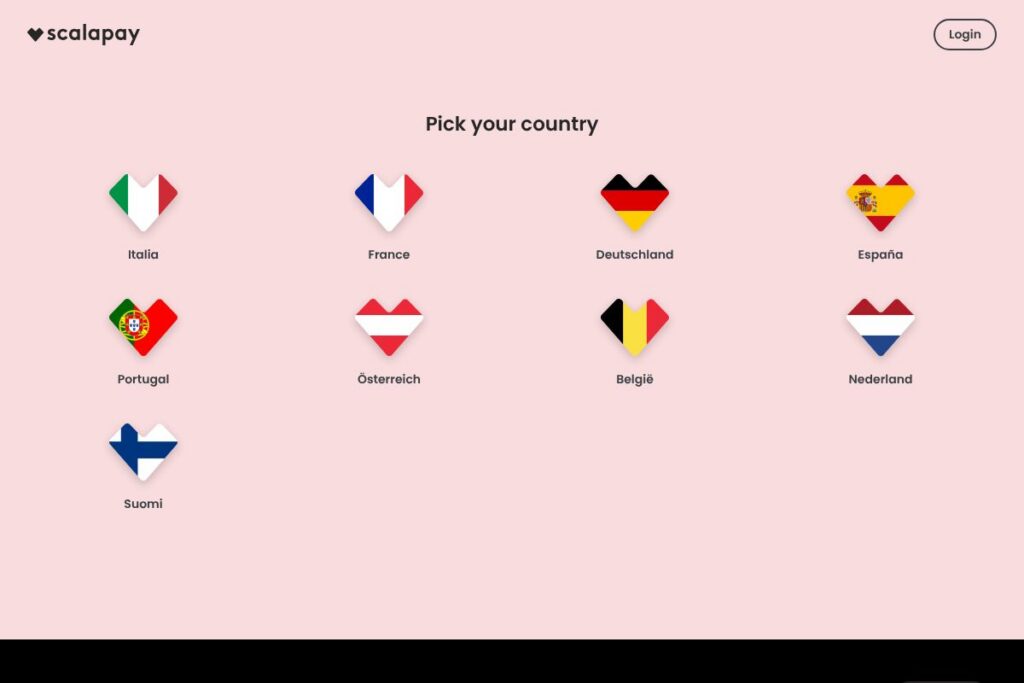
Scalapay operates in several European markets and expands regionally through merchant partnerships. Availability for consumers depends on the shopper’s country and whether the merchant offers Scalapay at checkout.
How does Scalapay handle in-store purchases?
Scalapay supports in-store payments through its mobile app, which generates a barcode to complete the transaction at the register. The barcode links the purchase to the consumer’s Scalapay account and the merchant finalizes the sale through their POS integration.
Final verdict: Scalapay
Scalapay offers a focused, consumer-friendly BNPL option built around three equal, interest-free instalments and supports both online checkout and in-store payments via a mobile app. It is designed to be easy for consumers to understand and straightforward for merchants to add to their payment options, often helping increase conversion and basket size.
Compared with Klarna, which provides a broader set of financing options and variable merchant programs, Scalapay is narrower in scope but simpler in consumer experience. Pricing for merchants differs across providers, so merchants should compare the Scalapay merchant terms with Klarna’s merchant programs when choosing a partner. For retailers seeking a quick-to-deploy, three-instalment solution that reduces friction for buyers, Scalapay is a practical choice; for merchants or customers who need longer-term credit options, other providers may be more appropriate.