What is Field Effect
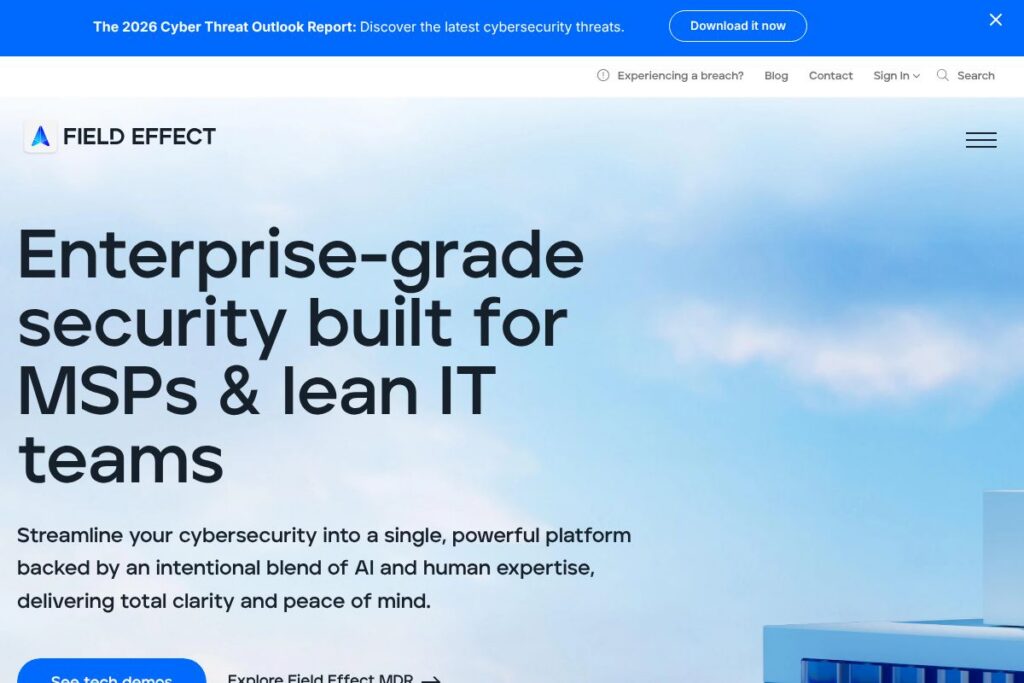
Field Effect is a managed detection and response provider that packages enterprise-grade security into a service designed for managed service providers and lean internal IT teams. Its core offering, Field Effect MDR, centralizes telemetry collection, threat detection, threat hunting, and incident response into a single managed platform so organizations do not have to build a full security operations center in-house.
Compared with endpoint-first vendors like CrowdStrike Falcon, Field Effect emphasizes a managed service model that combines human incident responders with automated detection. Compared with platform-heavy offerings such as Microsoft Defender for Endpoint, Field Effect focuses on delivering a fully managed MDR service that is multi-tenant and MSP-friendly, rather than a self-managed security stack. Against pure service providers like Arctic Wolf, Field Effect positions itself with integrated incident response capabilities and AI-assisted detection tuned for small and mid-sized environments.
All of this makes Field Effect well suited to MSPs that want to add a differentiated security service and to SMEs that need outsourced security operations. The platform is particularly useful where organizations need rapid detection, on-demand incident response, and centralized reporting without investing in a large security team.
How Field Effect Works
Field Effect collects telemetry from endpoints, networks, and cloud services and ingests that data into its detection pipeline where automated analytics and machine learning surface suspicious activity. Alerts are triaged by an on-shift security operations team that escalates confirmed incidents, performs threat hunting, and executes containment actions when required.
For MSPs the workflow typically includes onboarding each client into the multi-tenant platform, deploying lightweight agents or log integrations, applying tuned detection rules, and configuring client-specific response playbooks. Field Effect also offers incident response services and advisory engagements so teams can move from detection to containment and recovery quickly, while delivering client-facing reporting and compliance artifacts.
Field Effect features
Field Effect’s platform centers on managed detection and response, incident response services, and MSP enablement features. Recent emphasis has been on combining AI-assisted detection with human analysts to reduce false positives and accelerate response time.
Managed Detection and Response
Field Effect MDR continuously monitors client environments for threats using a combination of automated analytics and human review. The service includes alert triage, threat hunting, and automated containment measures so MSPs can deliver a turnkey detection and response capability to customers.
Incident Response and Recovery
When an incident occurs, Field Effect provides hands-on incident response to investigate, isolate affected systems, and guide recovery steps. The team supports forensic analysis, remediation guidance, and post-incident reporting to reduce downtime and improve future defenses.
Threat Intelligence and Hunting
Integrated threat intelligence feeds and proactive threat hunting enable detection of both commodity and targeted attacks. Analysts correlate telemetry across clients to surface emerging threats and apply insights to detection rules and response playbooks.
MSP Partner and White-label Capabilities
The platform supports multi-tenant management, client segmentation, and partner-oriented workflows so MSPs can operate a managed security offering at scale. Partner tools include centralized billing, reporting, and the ability to present services under the MSP brand.
EDR and Log Collection
Field Effect ingests endpoint telemetry, logs, and network data to build a comprehensive view of client environments. The combination of endpoint detection, behavioral analytics, and centralized logging improves context for investigations and response actions.
Professional Services and Readiness
Field Effect offers readiness services such as tabletop exercises, playbook development, security assessments, and training to reduce response time and recovery costs. These services help organizations prepare for incidents and strengthen controls before attacks occur.
Reporting and Compliance Support
The platform produces client-facing reports and dashboards that help MSPs demonstrate security posture and compliance outcomes. Reports can be used for board updates, regulator inquiries, and to show ROI for managed security services.
With these capabilities, Field Effect aims to reduce operational complexity for MSPs and SMEs by delivering both the technology and the human expertise needed to detect, investigate, and respond to incidents effectively.
Field Effect pricing
Field Effect uses a custom, subscription-based enterprise pricing model tailored to organizational size, number of endpoints, and the level of managed services required; pricing is typically structured for MSPs and commercial customers rather than fixed public tiers. For precise costs and plans suited to your environment contact Field Effect sales or explore partner options through their site to request a demo and pricing estimate.
What is Field Effect used for
Field Effect is commonly used by MSPs to offer managed detection and response as a revenue-generating service, with the vendor handling day-to-day security operations, incident handling, and client reporting. MSPs use Field Effect to add a packaged MDR capability without hiring a full security operations team.
Small and mid-sized enterprises use Field Effect when they need continuous security monitoring and on-demand incident response but lack in-house security staff. Use cases include ransomware detection and response, threat hunting, compliance reporting, and remediation guidance after a breach.
Pros and cons of Field Effect
Pros
- MSP-focused design: The platform supports multi-tenant deployment, partner workflows, and white-labeling so managed service providers can scale and monetize MDR services.
- Combined human and AI triage: Automated detection reduces noise while on-shift analysts handle complex investigations and containment, lowering time-to-resolution for incidents.
- Integrated incident response: Access to incident response experts and recovery services shortens downtime and provides hands-on remediation support during major incidents.
- Compliance and reporting: Built-in reporting and client-ready dashboards simplify compliance demonstrations and customer communications.
Cons
- Custom pricing model: Pricing is tailored and not published publicly, which can make initial comparisons with fixed-price competitors more time-consuming.
- Service dependency: Organizations that prefer a fully self-managed security stack may find a managed service model less flexible for internal workflows.
- Onboarding effort for complex environments: Environments with legacy systems or diverse telemetry sources can require significant onboarding and integration work to reach full visibility.
Does Field Effect Offer a Free Trial?
Field Effect offers demos and pilot engagements rather than a publicly listed free plan. Prospective customers can request a demo or arrange a pilot MDR engagement to validate detection effectiveness and service workflows before committing to a managed subscription.
Field Effect API and Integrations
Field Effect provides integrations to ingest logs and telemetry from common sources such as endpoints, cloud platforms, identity providers, and network devices so analysts can build detection logic across an environment. For specifics on supported connectors and developer access consult Field Effect’s platform pages and partner resources on their website.
Integration examples commonly used with managed detection platforms include Microsoft 365 and Azure telemetry, AWS logs, common EDR agents, and SIEM log forwarding; these integrations help deliver the centralized visibility Field Effect uses for detection and response.
10 Field Effect alternatives
Paid alternatives to Field Effect
- CrowdStrike Falcon – Cloud-native endpoint protection with EDR, managed threat hunting, and a large partner ecosystem for managed services.
- SentinelOne – Autonomous endpoint detection and response with rollback remediation and integrations for managed services.
- Arctic Wolf – Managed detection and response with a focus on concierge security operations and SOC-as-a-service for MSPs and enterprises.
- Rapid7 MDR – Combines detection, SIEM, and managed response with threat intelligence and remediation guidance.
- Sophos Managed Detection and Response – Bundles endpoint protection with managed monitoring and rapid response, often bundled with Sophos XDR components.
- Microsoft Defender for Business / Defender for Endpoint – Endpoint detection paired with Microsoft security services; commonly used in environments standardized on Microsoft 365.
- Palo Alto Networks Cortex XDR – Extended detection and response with advanced analytics and threat intelligence integration.
Open source alternatives to Field Effect
- Wazuh – Open source security monitoring and EDR with log collection, detection rules, and integration points for custom SOC deployments.
- Security Onion – A Linux distribution for threat hunting, enterprise security monitoring, and log analysis with a suite of open tools.
- TheHive Project – Open source incident response and case management platform used for coordinating investigations and response activities.
- OSSEC – Host-based intrusion detection system suited for log analysis and basic detection, often used as a component in broader monitoring solutions.
Frequently asked questions about Field Effect
What is Field Effect used for?
Field Effect is used for managed detection and response and incident response services. Organizations and MSPs use it to detect threats, perform investigations, and execute containment and recovery actions without maintaining a full security operations team.
Does Field Effect offer MDR services?
Yes, Field Effect offers a managed detection and response service called Field Effect MDR. The service couples automated detection with human analysts to triage alerts and respond to incidents on behalf of customers.
How does Field Effect pricing work?
Field Effect uses tailored subscription pricing for MSPs and enterprises. Pricing is typically based on factors such as number of endpoints, service level, and whether incident response or professional services are included, so organizations should contact sales for a custom quote.
Can Field Effect integrate with Microsoft 365 and cloud platforms?
Yes, Field Effect integrates with common cloud and identity platforms. The platform ingests telemetry from cloud services, identity providers, and endpoints to provide consolidated detection and investigation capabilities.
Can MSPs white-label Field Effect services?
Yes, Field Effect supports partner workflows and multi-tenant management that enable MSPs to deliver branded MDR services. Partner features include centralized reporting, billing workflows, and client segmentation to support managed service operations.
Final verdict: Field Effect
Field Effect delivers a practical MDR offering that pairs automated detection with experienced security analysts and incident responders, making it a strong fit for MSPs and SMEs that need hands-on security operations. Its MSP-centered features, multi-tenant architecture, and integrated incident response services are particularly valuable for service providers looking to offer a managed security product without building an internal SOC.
Compared with a major endpoint vendor like CrowdStrike, which sells per-endpoint protection and platform licensing, Field Effect emphasizes a managed subscription delivered with human-led response and partner tools. Pricing for Field Effect is generally custom and aligned to managed service needs, while CrowdStrike and similar endpoint vendors typically sell seat-based licensing that may require more internal operational investment to match a fully managed MDR service.
Overall, Field Effect is worth considering for MSPs that want to add MDR as a differentiated service and for small and mid-sized organizations that prefer outsourcing detection and response to a vendor with both automated tooling and on-demand human expertise. For demos, partner details, and tailored pricing, review the Field Effect MDR pages and request a demo directly on their site.