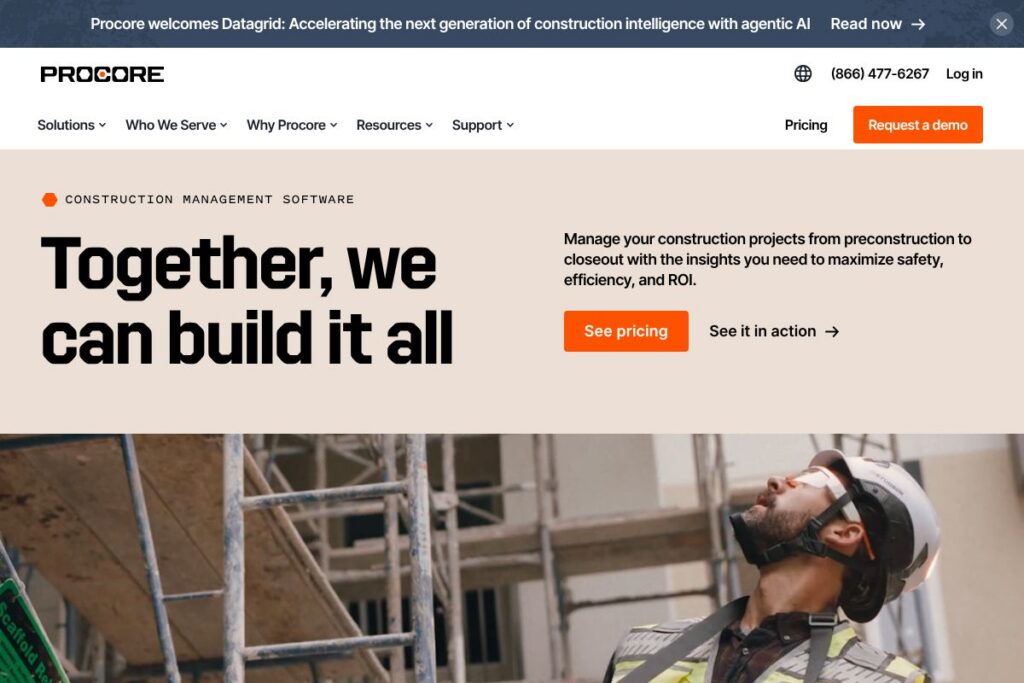

Procore: An Overview
Procore is a cloud-based construction management platform that connects field teams and office staff to a single source of project data. It consolidates project execution, cost management, resource tracking, and document control so teams can make decisions with real-time visibility and consistent records across preconstruction, construction, and closeout.
Compared with Autodesk Construction Cloud, Procore emphasizes a single unified platform experience with deep construction-focused workflows and a large third-party app marketplace. Compared with Buildertrend, which targets smaller contractors and homebuilders with out-of-the-box workflows, Procore aims at midmarket to enterprise contractors with broader modules and integrations. Compared with Viewpoint, which blends ERP and construction accounting, Procore focuses more on field execution and project-level collaboration while integrating with external financial systems when needed.
Procore excels at bringing field data into project controls, enforcing standardized processes for submittals, RFIs, daily logs, and safety, and scaling across large portfolios of projects. This makes it a practical choice for general contractors, specialty contractors, and owners who need consistent project governance and real-time access to construction progress.
How Procore Works
Procore centralizes project information in a web and mobile platform where teams create and update items such as drawings, RFIs, submittals, schedules, and change events. Field staff use the mobile app to capture photos, daily reports, and time entries which sync to the office so project managers can monitor progress and financial impacts immediately.
Project financials and budgets are updated alongside field progress so cost managers can reconcile commitments, invoices, and change orders without moving data between disconnected systems. Workflows are configurable by project, enabling custom approval chains for submittals and pay applications while maintaining an auditable history.
Procore also provides an app marketplace and APIs so teams can integrate specialized tools for estimating, accounting, and BIM. Many organizations configure Procore as the project control layer and link it to ERP or accounting systems to keep corporate finance aligned with on-site activity.
Procore features
Procore is organized around project execution, financial control, and field collaboration. Core capabilities include document and drawing control, RFI and submittal tracking, cost and budget management, daily logs and quality and safety workflows, and integrations through an App Marketplace. Recent emphasis on AI adds automation for routine tasks and better insights from pooled project data.
Let’s talk Procore’s Features
Project Management
Procore provides tools for RFIs, submittals, punch lists, meeting minutes, and daily logs so teams can manage construction processes from a single project hub. These features streamline communication between field and office, reduce duplicated work, and retain an auditable record of decisions and actions for each deliverable.
Cost Management
Budgeting, commitments, change events, and invoice tracking are handled within Procore so financial teams can see the downstream effects of field changes in near real time. Integrations with accounting systems let organizations preserve corporate financial controls while keeping project-level detail current.
Resource Management
Procore captures labor, equipment, and subcontractor utilization to help project managers allocate crews and forecast needs across jobs. Tracking hours and equipment usage supports payroll reconciliation and helps reduce idle time on site.
Document and Drawing Management
Procore stores versioned drawings and project documents with markup capabilities and field annotations so teams work from the latest plans. Centralized document control reduces rework by ensuring everyone references the same approved files.
Quality and Safety
Safety observations, inspections, incident reporting, and checklists are built into the platform to standardize compliance workflows. These features help teams track corrective actions, link safety items to specific locations, and aggregate safety performance across projects.
Procore AI
Procore uses AI to automate repetitive tasks such as extracting key data from documents, surfacing potential issues in submittals or change events, and generating insights from pooled project data. AI features aim to reduce administrative burden and provide foresight on schedule and cost risks.
Integrations and App Marketplace
An extensive marketplace connects Procore to estimating, BIM, quality assurance, accounting, and collaboration tools which extends the platform for specialized workflows. Integrations let teams keep existing best-of-breed tools while centralizing project execution in Procore.
With these capabilities, Procore’s biggest benefit is unifying field activity and financial controls so teams can act on timely, consistent data across every phase of a construction project.
Procore pricing
Procore uses a subscription-based, enterprise pricing model with custom quotes tailored to organization size, project volume, module selection, and support needs. For current pricing and plan configurations, review Procore’s available product and platform information or contact Procore sales to get a quote suited to your business.
What is Procore Used For?
Procore is used to manage the lifecycle of construction projects, including document control, project administration, quality and safety checks, and cost tracking. Teams use it to enforce standardized processes across projects so that field data, change events, and financials remain synchronized.
General contractors and specialty subcontractors use Procore to run daily operations on site, submit and respond to RFIs and submittals, and maintain accurate as-built records for closeout. Owners use Procore to gain program-level visibility into schedule, cost, and risk across portfolios, enabling more informed investment decisions.
Pros and Cons of Procore
Pros
- Centralized project data: Procore consolidates drawings, RFIs, submittals, daily logs, and financials into a single project record which reduces duplicate work and improves auditability.
- Field-first mobile tools: The mobile apps let field teams capture photos, observations, and time entries directly from the jobsite which accelerates reporting and keeps office teams informed.
- Extensive integrations: The App Marketplace and API ecosystem allow organizations to connect estimating, BIM, accounting, and specialized tools to Procore.
- Scales to enterprise portfolios: Procore supports large portfolios with multi-project rollups and reporting that help owners and large contractors manage program-level performance.
Cons
- Enterprise pricing model: The custom pricing approach can be costly for very small contractors and requires direct engagement with sales to understand total costs.
- Configuration effort: Implementing consistent workflows across projects can require upfront configuration and change management, particularly for organizations standardizing on new processes.
- Reporting customization: Some teams require additional BI tools or integrations to create deeply customized executive dashboards beyond the out-of-the-box reports.
Does Procore Offer a Free Trial?
Procore offers a free trial and product demo options for prospective customers. Contacting Procore for a demo or trial is the standard path to evaluate the platform, and the trial/demo typically provides access to core project and financial modules so teams can validate workflows; request access via Procore’s demo and contact options.
Procore API and Integrations
Procore provides a developer platform and public API that enable programmatic access to project data, document storage, and workflow objects; the Procore developer portal hosts the API documentation and resources. Developers can build custom integrations, automate data transfers, and create apps that surface Procore data in other systems.
Procore also maintains an App Marketplace with prebuilt integrations to tools for estimating, BIM, accounting, and field productivity so organizations can extend the platform without heavy custom development. Common integrations include document storage providers, estimating packages, and ERP/accounting systems.
10 Procore alternatives
Paid alternatives to Procore
- Autodesk Construction Cloud – A suite combining BIM, field collaboration, and construction management that emphasizes model-driven workflows and cross-discipline coordination.
- Buildertrend – A cloud platform aimed at homebuilders and specialty contractors with scheduling, customer communication, and estimating tools.
- Oracle Aconex – An enterprise project controls and document management solution popular with large infrastructure and owner organizations for project collaboration.
- Viewpoint – Construction ERP and project management software focusing on accounting, HR, and project controls for midmarket contractors.
- Trimble ProjectSight – A construction project management platform focused on cost control, field data capture, and project documentation.
- PlanGrid – Field-first drawing and document management with markup and version control, now part of Autodesk but still used for on-site plan control.
Open source alternatives to Procore
- OpenProject – An open source project management tool that provides task boards, Gantt charts, and document management suitable for teams that want a self-hosted option.
- ERPNext – A full open source ERP with project and construction modules that can be configured for job costing, timesheets, and invoicing for construction workflows.
- Odoo Community Edition – The open source community edition of Odoo includes project and document modules that can be adapted for small construction teams seeking a self-hosted solution.
- Taiga – An open source agile project management platform that can work for construction teams seeking lightweight task tracking and collaboration tools.
Frequently asked questions about Procore
What is Procore used for?
Procore is used to manage construction projects end to end. It organizes project documents, RFIs, submittals, daily logs, and financial tracking to connect field activity with office workflows.
How much does Procore cost?
Procore uses custom enterprise pricing. Costs depend on the number of projects, selected modules, and required services; contact Procore sales through their product pages for a tailored quote.
Does Procore have an API?
Yes, Procore provides a public API and developer portal. The Procore developer site documents endpoints for interacting with project data, documents, and workflow objects.
Can Procore be used on mobile devices?
Yes, Procore provides mobile apps for on-site use. Field teams can capture photos, submit daily reports, and update punch lists from Android and iOS devices which sync back to the project hub.
Does Procore include AI features?
Yes, Procore offers AI-powered capabilities. Procore AI automates routine tasks, extracts data from documents, and surfaces insights intended to reduce administrative work and identify schedule or cost risks.
Final Verdict: Procore
Procore stands out as an enterprise-grade construction platform that unifies field operations and project financials into a single system. It performs particularly well at standardizing project workflows, maintaining versioned documentation, and giving managers real-time visibility into progress and costs across many projects.
Compared with Autodesk Construction Cloud, Procore provides a more consolidated execution layer focused on project controls and field-to-office coordination, while Autodesk leans heavily into BIM integration and model-driven workflows. Pricing for Procore is quote-based and aimed at midmarket and enterprise customers, so organizations should evaluate required modules and integrations when comparing total cost of ownership against competitors like Autodesk.
Overall, Procore is a strong choice for contractors and owners that need a unified project platform that scales across portfolios and connects the jobsite with corporate project controls. For teams seeking a centralized, construction-focused system that supports real-time collaboration and integrates with accounting and BIM ecosystems, Procore is worth evaluating.