QAD | Redzone: An Overview
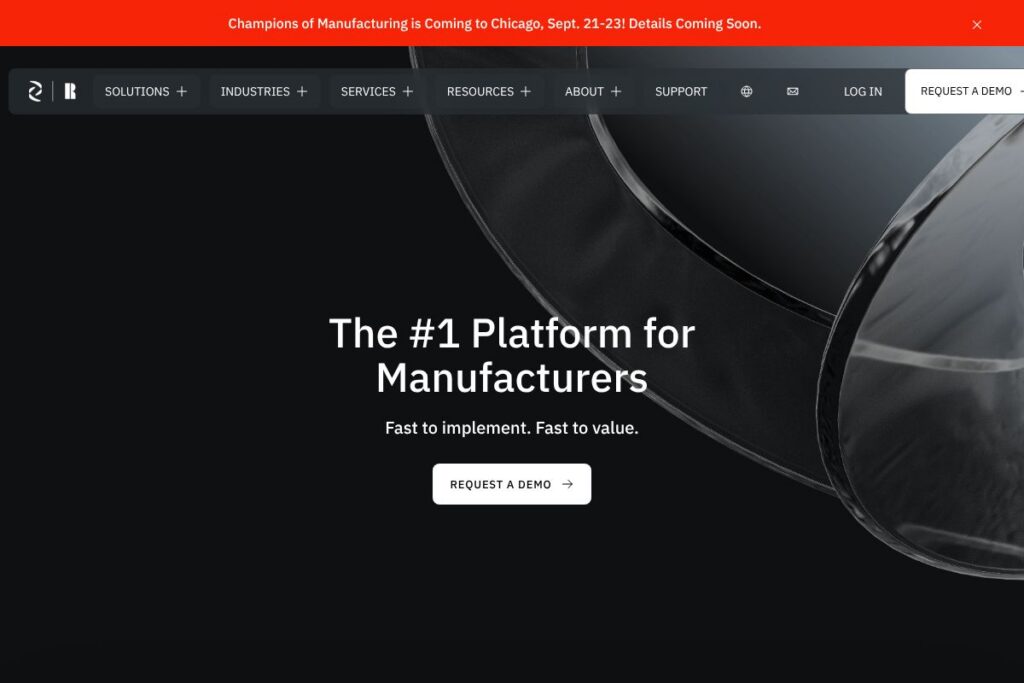
QAD | Redzone provides an adaptive manufacturing and supply chain platform built around agentic AI, real-time shop-floor execution, and frontline engagement tools. The platform emphasizes short implementation cycles, operational visibility from the shop floor to executive dashboards, and features designed to improve on-time delivery, throughput, and quality metrics for manufacturers.
Compared with SAP Manufacturing Execution, QAD | Redzone focuses on faster time-to-value and tighter frontline engagement rather than extensive ERP customization. Against Siemens Opcenter, QAD | Redzone is positioned as a lighter, more rapidly deployable layer that prioritizes worker-facing workflows and AI-guided corrective actions. Compared with Rockwell Automation solutions, QAD | Redzone places more emphasis on cloud-native decisioning and cross-site supply chain coordination rather than low-level control and PLC integration.
All of this makes QAD | Redzone especially useful for manufacturers that need real-time, actionable insights tied directly to frontline execution. It is well suited for plants that want measurable improvements in delivery performance and quality without lengthy customization projects, and for operations teams that want built-in workflows to close the loop between data, decisions, and execution. For product and company background see the company story and approach.
How QAD | Redzone Works
QAD | Redzone ingests production, quality, and supply signals from enterprise systems, plant-floor systems, and manual inputs, and applies agentic AI to prioritize actions and assign work. The platform surfaces recommended interventions to supervisors and frontline workers through task lists, alerts, and visual performance boards so teams can act on exceptions and continuously improve processes.
Implementation typically connects QAD | Redzone to a manufacturer’s ERP and MES, configures KPIs and thresholds, and deploys worker-facing interfaces on tablets and shop-floor displays. A typical workflow is data capture from machines and operators, AI-driven prioritization of issues, assignment of corrective work, and automated tracking of resolution and impact on KPIs. For implementation and deployment options review the implementation and services overview.
QAD | Redzone features
QAD | Redzone bundles shop-floor execution, frontline engagement, real-time analytics, and agentic AI orchestration so manufacturers can reduce waste, improve delivery, and accelerate continuous improvement. Recent emphasis has been on agentic AI capabilities that recommend next-best actions and automate routine coordination between teams.
Agentic AI orchestration
AI agents analyze production, quality, and supply data to recommend and sequence corrective actions, prioritize work by impact, and trigger escalation paths when issues persist. This helps teams focus on high-impact problems, reduces firefighting, and shortens resolution cycles.
Adaptive ERP integration
The platform integrates with ERP systems including QAD Adaptive ERP to synchronize orders, inventory, and schedule changes so execution reflects planning updates in near real time. That integration reduces double entry and keeps delivery commitments aligned across systems.
Shop-floor execution and worker engagement
Worker-facing apps provide structured task lists, standard work guidance, and digital checklists to reduce variability and capture contextual issue data. Supervisors get tools for assigning corrective actions and tracking follow-through across shifts and sites.
Real-time analytics and KPI dashboards
Preconfigured and customizable dashboards provide shift-, line-, and plant-level KPIs with drill-through to root causes and corrective actions. Real-time visibility supports daily management routines, standups, and executive reporting.
Quality management and root-cause analysis
Built-in quality workflows capture nonconformances, route containment actions, and surface recurring patterns for root-cause work. The platform links quality events to production and supply signals so teams can identify systemic issues faster.
Supply chain orchestration and exception management
QAD | Redzone coordinates inventory, supplier exceptions, and schedule changes to reduce late deliveries and expedite critical parts. Exception management workflows help prioritize supplier and internal actions to protect customer commitments.
With these capabilities, the biggest benefit is a closed-loop system that ties data to action: teams see problems, take recommended steps, and measure the operational impact to sustain continuous improvement. Learn more about feature details on the product overview.
QAD | Redzone Pricing
QAD | Redzone uses an enterprise pricing model tailored to manufacturing customers, with costs that reflect deployment scope, number of sites, user roles, and integration needs. Pricing is typically provided via a custom quote rather than a fixed public rate because deployments vary by scale and required integrations.
For specific pricing and licensing options contact sales or request a demonstration of capabilities through the request a demo page. Enterprise buyers can discuss subscription, subscription-plus-services, and multi-site deployment options with QAD | Redzone sales and partner teams.
What is QAD | Redzone Used For?
Manufacturing operations teams use QAD | Redzone to improve on-time delivery, reduce scrap and rework, and shorten time-to-repair for production failures. The platform centralizes issue detection and drives frontline action through tasking and guided workflows that align with daily management routines.
Supply chain and planning teams use it for exception handling, supplier coordination, and to make short-term schedule adjustments that preserve customer commitments. Continuous improvement and quality teams use the platform to capture corrective actions, analyze root causes, and measure the impact of process changes over time.
Pros and Cons of QAD | Redzone
Pros
- Fast implementation and time-to-value: QAD | Redzone is designed to deploy rapidly and deliver measurable shop-floor improvements within weeks, helping operations teams justify investment quickly.
- Agentic AI that recommends actions: Its AI prioritizes issues by likely impact so teams focus on the highest-value problems rather than purely reactive troubleshooting.
- Frontline-first design: Worker-facing apps and standard-work tools close the loop between data and execution, increasing adoption among supervisors and operators.
- ERP-native integration: Strong integration with QAD Adaptive ERP and common ERP/MES systems reduces synchronization gaps and manual reconciliation.
Cons
- Enterprise-focused pricing: Pricing is customized for each deployment, which can be a barrier for smaller manufacturers seeking predictable, lower-cost entry options. Contacting sales is required for detailed quotes.
- Requires integration effort: To realize full value, integrations with ERP, MES, PLCs, and other data sources are needed, which can add project complexity depending on a site’s landscape.
- Depth vs breadth trade-off: The platform targets operational execution and frontline engagement rather than deep PLC-level control; manufacturers seeking full automation stacks may pair it with specialized control vendors.
Does QAD | Redzone Offer a Free Trial?
QAD | Redzone is a paid enterprise platform and does not offer a public free trial; instead, the company provides demos and scoped pilot engagements that let manufacturers validate outcomes in a limited production area. To arrange a pilot or demo, use the request a demo form.
QAD | Redzone API and Integrations
QAD | Redzone provides APIs and connectors for ERP, MES, CMMS, and common industrial data sources, enabling data exchange for orders, inventory, work orders, and machine telemetry. The integration documentation and developer resources describe supported endpoints and connector options.
Common integrations include QAD Adaptive ERP, SAP, Oracle, historian systems, and IIoT platforms, plus out-of-the-box connectors for common manufacturing systems to accelerate deployments. For integration planning, consult the integration and partner ecosystem pages.
10 QAD | Redzone alternatives
Paid alternatives to QAD | Redzone
- Siemens Opcenter: Comprehensive manufacturing operations management with deep MES capabilities and detailed process control suited to large, complex plants.
- SAP Manufacturing Execution: Integrated MES and execution capabilities that tie directly into SAP ERP environments for end-to-end planning and execution.
- Rockwell Automation FactoryTalk: Strong at PLC-level integration and deterministic control, often used in heavy industry and process automation environments.
- Plex Systems: Cloud-native MES and ERP for discrete manufacturers that emphasizes traceability and production controls.
- Honeywell Forge: Industrial operations management with a focus on process industries, analytics, and asset performance management.
- Oracle Cloud Manufacturing: Cloud ERP-native manufacturing features with planning, execution, and quality capabilities for global enterprises.
Open source alternatives to QAD | Redzone
- ERPNext: Open source ERP with a manufacturing module that covers work orders, bill of materials, and shop-floor operations for smaller manufacturers.
- Odoo: Modular open source business apps with manufacturing apps for routing, work orders, and basic shop-floor control through community modules.
- Apache OFBiz: A flexible open source framework that can be extended to model manufacturing processes and integrate with custom shop-floor systems.
Frequently asked questions about QAD | Redzone
What is QAD | Redzone used for?
QAD | Redzone is used to connect shop-floor execution, frontline worker engagement, and supply chain exception handling. It helps manufacturers reduce delays, improve quality, and turn data into prioritized actions for operators and supervisors.
Does QAD | Redzone integrate with QAD Adaptive ERP?
Yes, QAD | Redzone integrates with QAD Adaptive ERP. That integration synchronizes orders, schedules, and inventory so execution reflects planning changes in near real time.
Can QAD | Redzone support multi-site manufacturing deployments?
Yes, it is designed for multi-site and multi-line deployments. The platform aggregates KPIs across plants, supports standardized workflows, and enables comparative analytics across locations.
Does QAD | Redzone offer APIs for third-party integrations?
Yes, the platform provides APIs and connectors for ERP, MES, and IIoT systems. Developers can use the integration documentation and partner connectors to map data flows and accelerate deployments.
Is QAD | Redzone suitable for small manufacturers?
QAD | Redzone is primarily enterprise-focused but can be scoped for smaller sites through pilot engagements. Small manufacturers should discuss pilot and pricing options with sales to determine fit and implementation scope.
Final verdict: QAD | Redzone
QAD | Redzone stands out for tying agentic AI to frontline workflows, making operational issues visible and actionable so teams can improve delivery and quality quickly. Its combination of worker-facing apps, real-time analytics, and ERP integration makes it a practical choice for manufacturers that need measurable shop-floor improvements without multi-year rollouts.
Compared with SAP Manufacturing Execution, QAD | Redzone typically offers faster implementations and a stronger focus on frontline adoption, while SAP provides broader enterprise feature depth and deeper ERP-native licensing. Pricing for QAD | Redzone is handled via tailored enterprise quotes, so manufacturers should request a demo or pilot through the request a demo page to assess fit and expected ROI.