
STARLIMS: An Overview
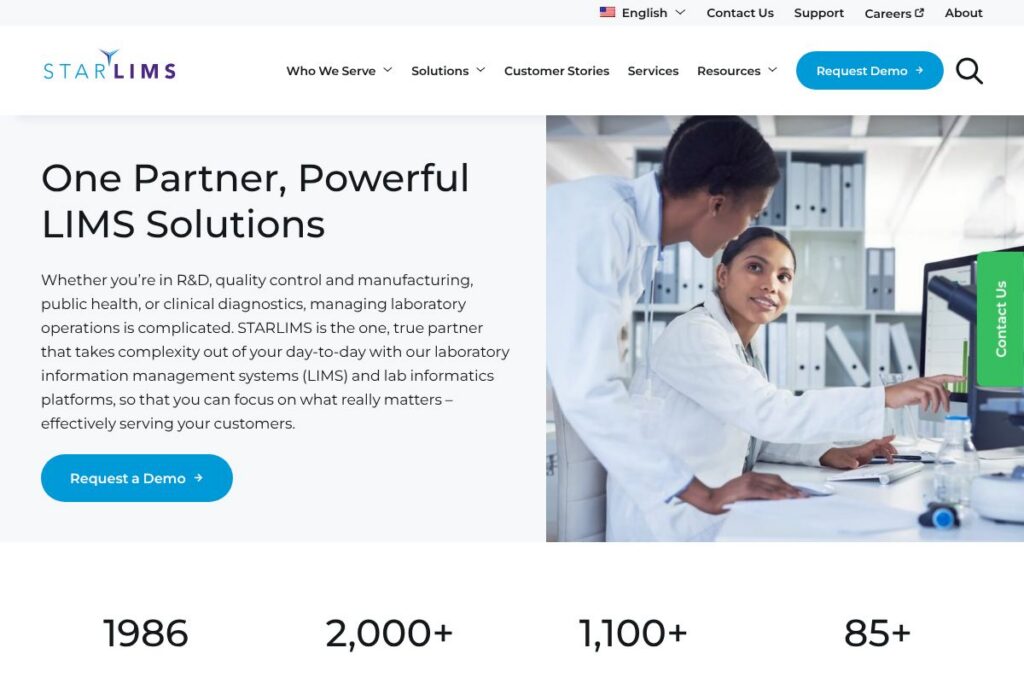
STARLIMS is a laboratory informatics suite built around a core laboratory information management system combined with complementary modules such as electronic lab notebook, laboratory execution system, scientific data management, and analytics. The platform is designed for regulated and high-throughput environments where traceability, auditability, and integrated reporting are central requirements. Explore the official STARLIMS site for product overviews and solution briefs.
Compared with LabWare, which is widely used for highly configurable LIMS deployments, STARLIMS emphasizes integrated add-ons such as SDMS and LES to deliver a single-vendor stack for many enterprise labs. Against Thermo Fisher SampleManager LIMS, STARLIMS competes on lifecycle traceability and regulatory workflows, while SampleManager is often chosen for tight instrument and reagent ecosystem integrations. When compared to LabVantage, STARLIMS focuses on packaged solutions for clinical and public health labs alongside configurable modules for research and manufacturing environments.
STARLIMS performs strongly as an enterprise-grade, end-to-end lab informatics platform that combines data capture, process automation, and analytics in one environment. It is well suited for medium to large laboratories in regulated industries, hospital and public health laboratories, and organizations that need deep traceability and audit controls across multiple laboratory disciplines.
How STARLIMS Works
STARLIMS centers on the LIMS database as the single source of truth for samples, tests, results, and metadata. Laboratories define sample lifecycle stages and workflows in the platform, and STARLIMS tracks chain of custody, test assignments, and result approvals while enforcing configured business rules and regulatory controls.
Modules such as ELN, LES, and SDMS connect to the core LIMS so that experimental notes, standard operating steps, and instrument files are linked to sample records. Instrument integrations and middleware let STARLIMS ingest results automatically or via validated interfaces, reducing manual entry and transcription risk.
For deployment, STARLIMS supports on-premises and cloud-hosted implementations with configurable user roles, electronic signatures, audit trails, and configurable reports. Typical workflows include sample accessioning, automated testing queues, result validation, release stamping, and archival of data to the SDMS for long-term retention.
What does STARLIMS do?
The platform provides laboratory-wide capabilities for sample management, process automation, data capture, and analytics. Core offerings include LIMS, ELN integration, LES, SDMS, and reporting tools that together support regulated workflows and operational visibility. Recent product messaging highlights tighter ELN connectivity and expanded analytics to help labs extract operational insights.
The platform includes several powerful capabilities worth highlighting:
Core LIMS
STARLIMS manages sample and test metadata, tracks sample custody, assigns tests to work queues, and records results. This reduces manual tracking, provides full audit history, and supports batch handling and chain-of-custody requirements.
Electronic Lab Notebook (ELN)
The ELN module collects structured experimental records and links them to LIMS sample records so that raw observations, protocols, and attachments are searchable and auditable. Integration with the ELN improves reproducibility and protects intellectual property during collaborative R&D.
Laboratory Execution System (LES)
LES provides stepwise, protocol-driven instructions for operators and instruments, enforcing process controls and recording execution details. This reduces operator variability and ensures consistent adherence to SOPs during testing and manufacturing tasks.
Scientific Data Management System (SDMS)
SDMS centralizes instrument files, chromatograms, spectra, and other large scientific objects while associating them with LIMS records. This makes file retrieval and long-term archival more systematic, and supports file-level traceability for audits.
Advanced Analytics and Reporting
Built-in reporting and analytics let labs create dashboards and trend analyses for quality metrics, turnaround time, and workload balancing. These capabilities support root-cause analysis and operational optimization without exporting sensitive data to third-party tools.
Instrument Integration and Connectivity
STARLIMS supports instrument drivers, standard protocols, and interface engines to automate data ingestion from analyzers and laboratory automation systems. Automated transfers reduce transcription errors and speed result availability.
Regulatory and Data Integrity Controls
The platform includes role-based access, configurable workflows, electronic signatures, and audit trails required for compliance with regulations such as CLIA, GLP, and ISO standards. Validation support is commonly part of enterprise deployments in regulated environments.
Deployment and Security
STARLIMS can be deployed on-premises or in hosted environments with options for encrypted storage, secure user authentication, and enterprise backup strategies. These controls help meet internal IT policies and external regulatory obligations.
With its mix of modules, STARLIMS is best viewed as a modular, enterprise LIMS platform that brings sample control, execution guidance, file management, and analytics together under consistent governance.
STARLIMS pricing
STARLIMS uses an enterprise software pricing model with flexible, customer-tailored licensing based on deployment, modules required, number of users, and support levels. Pricing is typically provided through customer engagement rather than published public tiers.
For specific quotes and to discuss licensing options, contact STARLIMS sales or request a tailored proposal via the STARLIMS contact page. The vendor can provide details on subscription, perpetual licensing, hosted options, and professional services for validation and implementation.
What is STARLIMS Used For?
STARLIMS is commonly used to manage samples and testing workflows in clinical diagnostics, public health laboratories, pharmaceutical R&D, and manufacturing quality control. Teams rely on the platform to ensure consistent sample handling, enforce SOPs using LES, and maintain electronic records for audits.
Operational users use STARLIMS for day-to-day sample accessioning, test scheduling, and result release, while scientists and researchers use linked ELN capabilities for experimental documentation. Informatics teams use the analytics and SDMS modules to assemble operational dashboards, extract trends, and feed results into downstream systems.
Pros and Cons of STARLIMS
Pros
- Comprehensive module set: The product combines LIMS, ELN, LES, SDMS, and analytics into a single ecosystem, which simplifies integration and reduces the need for multiple vendors. This lowers system interoperability effort and centralizes governance.
- Strong regulatory controls: STARLIMS includes audit trails, electronic signatures, and validation support, helping regulated labs meet compliance requirements with documented workflows and traceability.
- Enterprise-grade integration: The platform supports instrument connectivity and standard interfaces, enabling automated result capture and integration with HIS, ERP, or other enterprise systems.
Cons
- Enterprise deployment complexity: Large-scale implementations may require significant professional services for configuration, validation, and change management, which can lengthen time to value. Smaller labs may find initial setup resource intensive.
- Custom pricing and procurement: With no public pricing tiers, procurement requires direct vendor engagement which can slow evaluation for teams that want transparent, self-service pricing comparisons.
- Learning curve for users: Rich functionality and configurable workflows can increase training needs for operators and administrators compared to lighter-weight lab tools.
Does STARLIMS Offer a Free Trial?
STARLIMS offers custom trial or proof-of-concept engagements rather than an out-of-the-box free plan. Prospective customers typically work with STARLIMS sales to arrange demonstrations, evaluation environments, or pilot projects tailored to their workflow and compliance requirements.
STARLIMS API and Integrations
STARLIMS provides APIs and standard interfaces for instrument connectivity, middleware integration, and data exchange with enterprise systems. The STARLIMS integrations and developer resources describe common interfaces, supported protocols, and typical integration patterns.
Common integration points include instrument drivers, HL7 interfaces for clinical systems, ERP connections for sample tracking in manufacturing, and data exports to reporting or analytics tools. Implementation teams often combine provided APIs with interface engines for enterprise-grade integrations.
10 STARLIMS alternatives
Paid alternatives to STARLIMS
- LabWare: A highly configurable LIMS used across industries, known for deep customization and strong support for complex workflows and validations.
- Thermo Fisher SampleManager LIMS: Enterprise LIMS with built-in scientific data management and close ties to Thermo instrument ecosystems for streamlined instrument integration.
- LabVantage: An enterprise informatics platform targeting R&D and manufacturing labs, with integrated LIMS, ELN, and laboratory informatics capabilities.
- Benchling: A cloud-native R&D platform focused on scientific data capture and collaboration, particularly for biotech and life sciences research teams.
- Dotmatics: R&D informatics platform for data visualization, ELN, and scientific workflows, often used alongside LIMS for research-heavy organizations.
Open source alternatives to STARLIMS
- Bika LIMS: An open source LIMS project suited for small to medium labs that need sample management with community-driven extensions and a lower licensing cost structure.
- Senaite: A successor project to Bika offering a modular open-source LIMS framework with REST APIs and extensibility for custom workflows.
- OpenSpecimen: An open source biospecimen management system focused on biobanks, cohort studies, and specimen tracking with investigator-centric features.
- LabKey: An open source platform for managing, integrating, and publishing biomedical research data, commonly used in translational research environments.
Frequently asked questions about STARLIMS
What industries use STARLIMS?
STARLIMS is used across clinical diagnostics, public health, pharmaceutical R&D, and manufacturing quality labs. Its modules support regulated workflows and sample traceability required in these sectors.
Does STARLIMS integrate with laboratory instruments?
Yes, STARLIMS supports instrument drivers and standard interfaces to automate result capture. Integrations reduce manual entry and are typically implemented using provided drivers or middleware.
Can STARLIMS handle regulatory compliance needs?
Yes, STARLIMS includes features for audit trails, electronic signatures, and role-based access to support regulatory requirements. These controls are commonly used in GLP, CLIA, and ISO-aligned environments.
Does STARLIMS offer cloud deployment options?
STARLIMS can be deployed on-premises or in hosted environments depending on customer requirements. Hosted options include managed infrastructure and support for backup, security, and maintenance.
How can I get pricing or a demo of STARLIMS?
You can request pricing or schedule a demo directly through STARLIMS sales. Start by contacting the vendor using the STARLIMS contact page to discuss requirements and receive a tailored proposal.
Final verdict: STARLIMS
STARLIMS is a mature, feature-rich laboratory informatics suite that brings LIMS, ELN, LES, SDMS, and analytics together to support regulated and high-throughput labs. It does particularly well at providing traceability, audit-ready workflows, and integrated file management, making it a good match for clinical, public health, and enterprise R&D environments.
Compared to LabWare, which also targets enterprise LIMS deployments, STARLIMS typically competes on modular packaging and integrated analytics while both vendors use custom pricing models that require vendor engagement. Organizations choosing between the two should evaluate required modules, integration complexity, and available professional services to determine which platform offers better total cost of ownership for their specific workflows.